
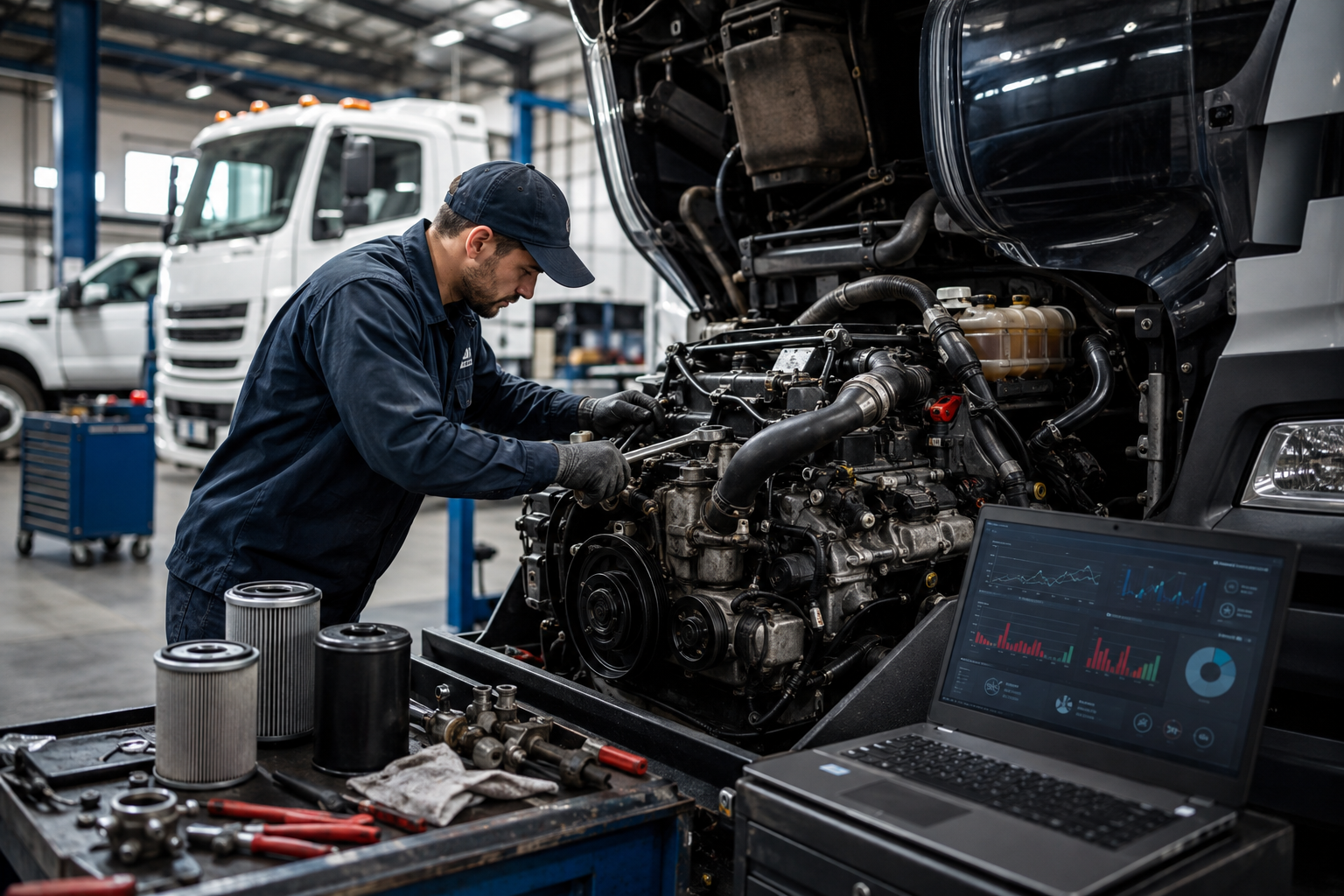
Every hour a fleet vehicle is off the road can hurt productivity and add to operational costs. That is why maintaining good diesel engine performance should always be on any fleet manager’s agenda. Regular check-ups and servicing can help to avoid potential problems and also avoid costly repairs.
Whether you operate a small fleet or a big fleet, a proactive maintenance strategy can help you keep your engines running longer, save on fuel, and ensure they run properly. Here are some tips that might help you to improve your fleet performance.
What Factors Have the Biggest Impact on Diesel Engine Performance?
Engine condition is only one part. Maintenance practices, operating conditions, fuel quality, and the state of critical components all affect how efficiently a fleet actually runs day to day.
The areas that matter most:
- How consistently preventive maintenance schedules are followed
- Fuel and lubricant quality
- Air and fuel filtration
- Cooling system efficiency
- Driver habits behind the wheel
- How quickly worn components get replaced
When these get managed properly and consistently, better reliability, improved fuel economy, and fewer unplanned repairs tend to follow.
7 Diesel Engine Performance Tips Every Fleet Owner Should Follow
Stay Consistent with Preventive Maintenance
Routine servicing is where everything else starts. Following recommended maintenance intervals catches minor issues before they turn into the kind of failures that take a vehicle off the road for days. Skipping a service to save time almost always costs more time later.
Use High-Quality Fuel and Lubricants
Poor fuel quality and unsuitable lubricants affect combustion, build up deposits inside the engine, and accelerate wear on components that are already working hard. Following manufacturer recommendations here isn’t overcaution.
Replace Worn Filters on Time
Air, fuel, and oil filters have a direct impact on how efficiently an engine runs. Clogged filters restrict the airflow or fuel delivery the engine needs, which forces it to compensate in ways that increase wear and fuel consumption. Replacing them on schedule is one of the lower-cost maintenance tasks with one of the higher returns.
Keep the Cooling System in Good Condition
Overheating is one of the most common routes to serious engine damage, and cooling system problems usually develop gradually rather than suddenly. Check coolant levels, hoses, radiator, and connections regularly- not just when the temperature gauge starts moving in the wrong direction.
Respond to Warning Signs Early
Unusual engine noise, excessive exhaust smoke, higher fuel consumption, reduced power — these things don’t usually mean a catastrophic failure is imminent, but they always mean something is worth investigating. The cost of looking into a warning sign early is almost always lower than ignoring it until it becomes something bigger.
Encourage Efficient Driving Habits
Driver behavior affects engine health in ways that maintenance schedules alone can’t compensate for. Excessive idling, harsh acceleration, and overloading vehicles all put unnecessary stress on engines that are already working under demanding conditions. Small changes in driving habits make a measurable difference over time across a fleet.
Choose Quality Replacement Parts
Maintenance only delivers what the parts going in are capable of. Using dependable components that meet manufacturer specifications keeps the engine performing reliably between services.
For businesses running Cummins Diesel Performance Parts, using compatible replacements rather than cheaper alternatives is what makes the maintenance investment actually hold up.
Which Fleet Maintenance Metrics Should You Monitor?
The monitoring of these data will make it easier for the owner of the fleet to spot any trends that may lead to future expenses.
| Metric | Why It Matters |
| Fuel consumption | Highlights changes in engine efficiency |
| Oil consumption | Can indicate internal engine wear |
| Coolant level | Helps detect cooling system issues early |
| Vehicle downtime | Measures how well maintenance is actually working |
| Service intervals | Keeps preventive maintenance on schedule |
Monitoring such metrics makes it possible to plan for maintenance and minimize breakdowns, among others.
When Do Small Performance Issues Become Expensive Repairs?
Most major engine failures don’t come out of nowhere. They start as something smaller that was noticed but not acted on or not noticed at all.
Warning signs worth taking seriously:
- Reduced engine power that wasn’t there before
- Hard starting under normal conditions
- Exhaust smoke that’s heavier or different in color
- Fuel consumption climbing without explanation
- Engine running hotter than usual
- Oil or coolant showing up where they shouldn’t
Catching these early keeps the repair straightforward. Leaving them tends to drag other components into the problem.
How Do Quality Engine Parts Support Long-Term Fleet Performance?
Preventive maintenance is only as effective as the components being used. An oil change with the wrong grade lubricant, a filter that doesn’t seal properly, a belt that’s the right size but not built for the operating conditions- these things matter, and they show up eventually.
Whether sourcing Cummins Engine Parts Online or through an authorized supplier, using genuine and compatible parts maintains reliability and keeps the engine meeting manufacturer standards.
For Cummins-powered fleets, Cummins Dongfeng provides engines and replacement solutions that are built for the equipment rather than adapted to fit it.
Keep Your Fleet Performing at Its Best
Strong diesel engine performance doesn’t come from responding well to breakdowns. It comes from not having them in the first place- or at least catching the warning signs early enough that they stay manageable.
Consistent maintenance, proper monitoring, and quality replacement components are what make that possible. For fleets running on Cummins engines, combining those practices with dependable engine solutions from Cummins Dongfeng keeps vehicles on the road, reduces downtime, and supports the kind of operational efficiency that actually affects the bottom line.
FAQs
1. How do fleet owners ensure better performance of their diesel engines?
Regular maintenance, using quality fuel and lubricants, timely replacement of filters, and paying attention to warning signs can significantly enhance the performance of diesel engines.
2. What factors influence diesel engine performance most?
Fleet engine performance depends on several factors such as regularity of maintenance, quality of fuel, cooling effectiveness, air filtration, and condition of critical components of the engine.
3. Do replacement parts positively affect engine performance?
Sure, good quality Cummins Diesel Performance Parts, as well as other compatible parts, ensure proper performance of diesel engines for a long time.
4. How frequently should diesel engines of the fleet be serviced?
Diesel engines should be serviced regularly according to their service life and manufacturer’s recommendations.
5. Where to get original Cummins engine parts?
Genuine Cummins Engine Parts Online can be purchased via Cummins Dongfeng and other reputable suppliers.