
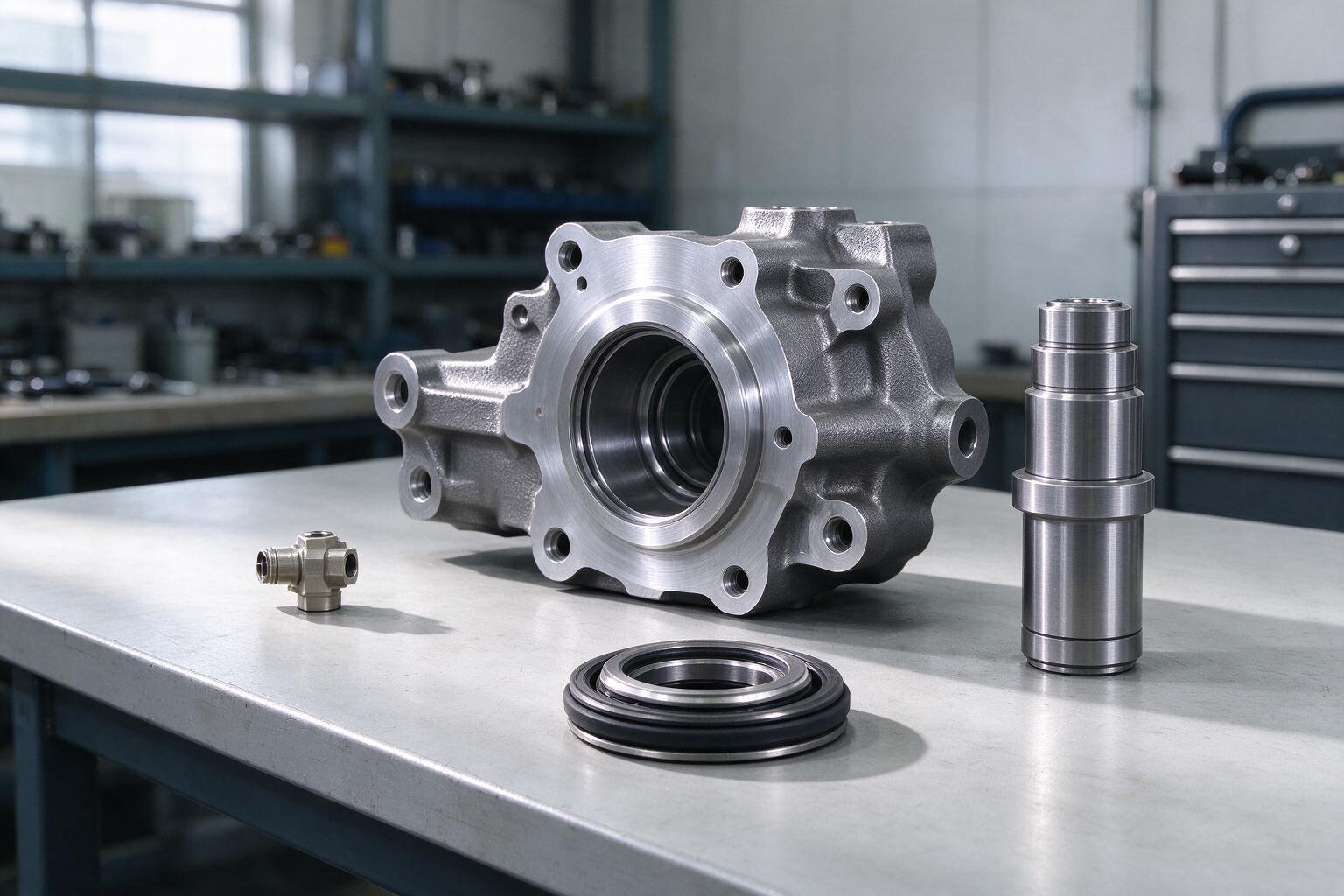
Counterfeit Cummins components circulate through online marketplaces, unbranded aftermarket channels, and occasionally through legitimate distributors that have been misled by their own suppliers. Knowing how to identify genuine Cummins spare parts matters for repair shops and fleet maintenance teams, because the cost of a counterfeit part is rarely limited to the purchase price. Counterfeit components often fail earlier than their genuine counterparts and can take adjacent systems with them. A counterfeit fuel injector with incorrect spray characteristics can wash cylinder walls and contaminate the oil, while a low-quality turbocharger bearing can fail and send debris into the intake tract. Non-genuine sensors may report plausible but inaccurate values, causing the ECM to command incorrect fueling or regeneration cycles that damage the aftertreatment system.
Start With the Correct Cummins Part Number
Cummins part numbers are typically seven digits, sometimes followed by a suffix or configuration code that identifies a specific build variant. The authoritative reference for any number is the engine data plate and the parts catalog for that engine family. Data plates on the engine block or valve cover list the engine serial number (ESN) and often the control parts list (CPL), which narrows component selection to the correct build.
Verification should run against the ESN, not the vehicle model. The same engine family can carry different injectors, turbochargers, water pumps, and sensors depending on build year, emissions tier, and rating. A part number that fits one chassis with a given engine may not fit another chassis with the same engine family but a different CPL. Shops that order by vehicle model risk installing components that bolt on but do not match the calibration.
Superseded numbers require a cross-reference check. Cummins routinely replaces part numbers, and the current number should appear on the catalog page or in a supersession record. A supplier quoting an obsolete number without a documented supersession trail warrants verification before the order is placed.
Documentation closes the loop. The repair order should record the ESN, the part number ordered, the supersession reference if applicable, and the supplier name. If a fitment or warranty dispute arises later, this record establishes what was specified and where it came from.
| Record on Repair Order | Purpose |
|---|---|
| Engine serial number (ESN) | Confirms correct build and CPL |
| Part number and suffix | Ties order to catalog entry |
| Supersession reference | Documents number change |
| Supplier name | Supports dispute resolution |
Examine Packaging and Labeling
Packaging is the first verifiable layer of authentication available to a repair shop or fleet maintenance team before a part is installed. Genuine Cummins packaging typically carries the Cummins logo, the part number, and a barcode or QR code that links to a verification record. Scanning that code against the Cummins verification system is the most direct check available, and a code that fails to resolve or points to an unrelated product record warrants closer inspection of the entire shipment.
Print quality is a reliable secondary indicator. Genuine labels are produced with sharp, consistent lettering and clean edges on logos and part numbers. Smudged, misaligned, or low-contrast printing is a common counterfeit indicator, as is inconsistent font weight across a single label or a logo that appears slightly distorted when compared against a known genuine example.
Part number matching should be confirmed at three points: the box label, the part itself (stamped, etched, or printed depending on the component), and the packing slip. Any mismatch between these three is grounds for holding the part and contacting the supplier before installation.
| Check | Genuine Indicator | Warning Sign |
|---|---|---|
| Label printing | Sharp, consistent, clean edges | Smudged, misaligned, low contrast |
| Barcode/QR code | Resolves to a verification record | Fails to scan or links to unrelated product |
| Part number | Matches box, part, and packing slip | Mismatch at any of the three points |
| Seals | Intact sealed bags, tamper-evident closures | Resealed bags or generic packaging |
Sealed bags and tamper-evident closures should be intact on arrival. Resealed bags, missing seals, or plain generic packaging around a part that normally ships in branded material are warning signs that justify quarantine of the item until the supplier confirms its origin.
Inspect the Part Itself
Physical inspection is the most direct method of verifying a Cummins spare part, and it requires no special equipment beyond adequate lighting and, where available, a known genuine reference unit.
Castings and Markings
Castings on genuine components usually carry the Cummins name or logo, a part number, and sometimes a casting number or date code. Markings are typically crisp and consistently positioned. Faint, smeared, or missing markings warrant closer scrutiny. Date codes can also help confirm whether a part’s production period is plausible for the application.
Machining and Finish
Machining quality, thread finish, and surface treatment should be uniform across the part. Rough castings, uneven plating, and poorly cut threads suggest a non-genuine item. Check machined faces for tool marks that are consistent in direction and depth, and inspect threaded holes and studs for clean, fully formed threads. Plating or coating should cover surfaces evenly, without runs, bare patches, or visible substrate.
Electronic Components
Electronic components such as sensors and injectors should show a legible label with a serial or lot number. Labels that are faded, misaligned, or missing serial information are a warning sign. Where the part connects to a harness, connector housings and terminal plating should match the expected specification.
Side-by-Side Comparison
Compare a suspect part against a known genuine unit of the same number when possible. Side-by-side comparison exposes finish and marking differences that are difficult to judge in isolation, including font style, logo proportions, casting texture, and component weight.
Use Digital Verification Tools
Cummins maintains online parts catalogs and dealer lookup tools that allow a buyer to confirm whether a part number is valid for a specific engine serial number (ESN). Because part numbers can vary by engine configuration, emissions tier, and build date, checking a number against the ESN is a more reliable test than matching the number alone. Repair shops should record the ESN before ordering and run the number through the catalog or a dealer portal to confirm fitment.
Packaging on genuine parts typically carries a QR code that resolves to a product record. Scanning the code should return information consistent with the part number, description, and packaging label. A code that fails to resolve, returns an error, or points to an unrelated page is a red flag and warrants holding the part pending confirmation from an authorized dealer.
Some electronic components, including ECMs and sensors, carry serial numbers that dealers can validate against distribution records. This check can reveal whether a unit was sold through legitimate channels and whether it has been reported as stolen or previously returned. Serial validation is particularly useful for high-value electronics where counterfeits are more common.
Verification results should be retained with the purchase documentation. Screenshots or printouts of catalog lookups, QR scan results, and serial number confirmations create an audit trail that supports warranty claims and helps resolve disputes with suppliers. Keeping these records alongside invoices and packing slips gives fleet maintenance teams a defensible record of due diligence if a part is later questioned.
| Check | Tool or Method | What It Confirms |
|---|---|---|
| Part number fitment | Online catalog or dealer lookup using ESN | Number is valid for the engine configuration |
| Packaging authenticity | QR code scan | Code resolves to a matching product record |
| Electronic component history | Dealer serial number validation | Unit traceable through distribution records |
| Documentation | Screenshots and printouts filed with purchase records | Audit trail for warranty and disputes |
Assess the Supplier
The supplier is the first control point in verifying a genuine Cummins part. Authorized Cummins distributors and dealers provide the most direct route, since parts move through a documented chain of custody from Cummins to the counter. Invoices from these channels carry traceable part numbers and lot information that support warranty claims later.
Independent suppliers can be legitimate resellers, but the burden of proof shifts to the buyer. Request the invoice trail showing how the part reached the supplier, ideally back to an authorized distributor. Confirm the return policy in writing before purchase, including whether returns are accepted on electrical or fuel-system components and who covers freight. A supplier unwilling to document provenance or commit to terms in writing is a risk regardless of price.
Pricing is a practical screening tool. Prices far below market for the same part number, particularly on high-value items such as injectors and turbochargers, are a common counterfeit signal. Counterfeiters concentrate on parts where the margin is largest, and a quote that undercuts authorized channels by a wide margin usually reflects either grey-market sourcing or outright counterfeit goods.
Finally, evaluate after-sale support. A credible supplier can explain how warranty claims are handled and can provide technical documentation such as installation specifications or service bulletins for the part number. Suppliers who sell the part but cannot support it after delivery leave the repair shop or fleet carrying the risk.
| Check | Acceptable | Warning sign |
|---|---|---|
| Provenance | Invoice trail to authorized distributor | No documentation offered |
| Return policy | Written terms, defined freight responsibility | Verbal assurances only |
| Price | Within normal market range | Far below market on injectors, turbochargers |
| Support | Warranty process and technical documents available | Part-only transaction, no after-sale contact |
Common Counterfeit Categories to Watch
Counterfeit Cummins parts cluster around a few high-demand categories. Knowing where the risk concentrates helps repair shops and fleet maintenance teams focus inspection effort where it matters most.
Fuel System Components
Injectors, fuel pumps, and repair kits carry high unit values and are among the most frequently counterfeited items. A counterfeit injector may flow within tolerance when new but degrade quickly, causing rough running, increased fuel consumption, or cylinder damage. Check part-number formatting, laser marking consistency, and packaging seals. For pumps and kits, verify that internal component finishes and tolerances match the expected specification.
Filters
Filter counterfeits are common because of high replacement volume. Inspect the filter media, pleat count, and end-cap bonding. Genuine filters use media rated for the application; counterfeit versions often use inferior media that bypasses unfiltered oil or fuel, or collapses under differential pressure. Compare pleat count and spacing against a known-genuine sample, and check that end caps are securely bonded with no gaps or loose material.
Sensors and Electronic Modules
Label quality and connector fit are the primary visual checks. Genuine labels are cleanly printed with legible part numbers and consistent fonts. Counterfeit labels may be misaligned, faded, or carry incorrect number sequences. Test connector fit: counterfeit housings often seat poorly, use lower-grade plastics, or have terminals that do not lock securely, leading to intermittent faults.
Gaskets and Seals
Material grade and dimensional accuracy determine whether a seal holds. Counterfeit gaskets and seals may use compounds that do not meet the temperature and pressure ratings of the application, leading to premature hardening, weeping, or blowout. Verify thickness, durometer feel, and edge finish against specification.
| Category | Primary Inspection Points |
|---|---|
| Fuel system components | Part-number marking, packaging seals, internal finish |
| Filters | Media quality, pleat count, end-cap bonding |
| Sensors and modules | Label print quality, connector fit and terminal lock |
| Gaskets and seals | Material grade, dimensions, rated temperature and pressure |
Documentation and Warranty Checks
Documentation is one of the most reliable indicators of a genuine Cummins spare part. A legitimate purchase should be accompanied by an invoice that clearly states the part number, quantity purchased, date of sale, and full supplier details, including business name and address. Repair shops should compare the invoiced part number against the number stamped or printed on the component and its packaging. Discrepancies between the invoice, the label, and the part itself are a reason to hold the transaction and query the supplier before installation.
Warranty terms should be confirmed in writing before purchase, not after a failure. Genuine parts warranty is typically administered through the authorized distribution channel, meaning the claim process runs through the supplier or distributor who sold the part rather than through an informal reseller. Buyers should ask for the warranty period, what is covered, and the steps required to file a claim, including whether proof of purchase and returned packaging are needed. A supplier who cannot state these terms clearly is a risk.
Retain the packaging, labels, and invoice until the part is installed and the repair is verified in service. These items support both warranty claims and any later questions about part authenticity.
For fleet buyers, the purchasing system should list approved suppliers by name and restrict orders to those sources. Standardizing approved suppliers reduces exposure to mixed inventories, where genuine and non-genuine parts may be stocked together and misidentified at the point of issue.
A Practical Checklist for Receiving Inspections
Receiving inspections should be treated as a verification step, not a formality. A consistent checklist allows technicians to confirm that a delivered component matches the engine and the work order before it enters inventory or the shop floor.
Confirm the Part Number Against the ESN and Repair Order
The first check is documentary. The part number on the invoice and packaging should be reconciled with the engine serial number (ESN) and the repair order. Cummins parts are application-specific, and superseded or revised part numbers are common. Confirm that any supersession is documented and that the replacement number is valid for the ESN in question. A part that fits the engine family but not the specific rating or build configuration should be held pending clarification.
Check Packaging Seals, Labels, and Barcode Resolution
Inspect carton seals for continuity and evidence of re-taping. Label print quality is a useful indicator: genuine labels typically show sharp, legible text, consistent fonts, and correctly aligned fields. Scan the barcode or QR code and confirm that the decoded value matches the printed part number. Codes that fail to scan or resolve to a different number warrant a hold.
Inspect Castings and Machined Surfaces
Examine castings for the logo, part number, and foundry markings. Lettering should be crisp and consistent in depth. Machined surfaces should show uniform finish, without tool marks, porosity, or corrosion inconsistent with a new part. Compare against a known-good sample where available.
Record the Results
Log the supplier, invoice number, part number, ESN, and verification outcome in the maintenance file. This record supports warranty claims and traceability audits.
| Check | Pass Criteria | Record |
|---|---|---|
| Part number vs. ESN | Match or documented supersession | Part number, ESN |
| Packaging and labels | Seals intact, print sharp | Photos if doubtful |
| Barcode or QR | Scans to printed number | Scan result |
| Casting and finish | Logo and number legible, finish uniform | Notes |