
Table of Content
- The Complete Guide to Cummins Diesel Parts: Essential Diesel Engine Parts, Maintenance Tips, and Buying Advice
- What Are the Core Components of a Diesel Powerplant?
- How Does Preventive Maintenance Keep Your Motor Running?
- What Should You Consider Before Purchasing Replacement Spares?
- Keep Your Fleet Moving Forward
- Key Takeaways
- Frequently Asked Questions About Heavy-Duty Motors
When maintaining a powerful heavy commercial truck or industrial equipment, you need to know how to keep each individual part that produces power in good condition. Heavy-duty vehicle maintenance is essential because a well-maintained motor can easily last between 400,000 miles and more.
Indeed, data from the latest industry report shows that almost 96.6% of new commercial vehicle registrations in the European Union in 2022 were for compression-ignition vehicles. Noticing the signs of mechanical wear and then knowing what replacements to source will save you from devastating mechanical failures and high repair costs.
What Are the Core Components of a Diesel Powerplant?
These heavy-duty powerplants generate ignition through extreme compression, rather than using the electrical spark plugs to ignite fuel as seen in the traditional gasoline setups. Their air compressions are sometimes as high as 20:1 to create the extremely high temperature required for fuel to start burning spontaneously. This aggressive internal environment requires each component, from the block to the most minute seals, to be over-engineered to resist tremendous physical pressure and thermal stress.
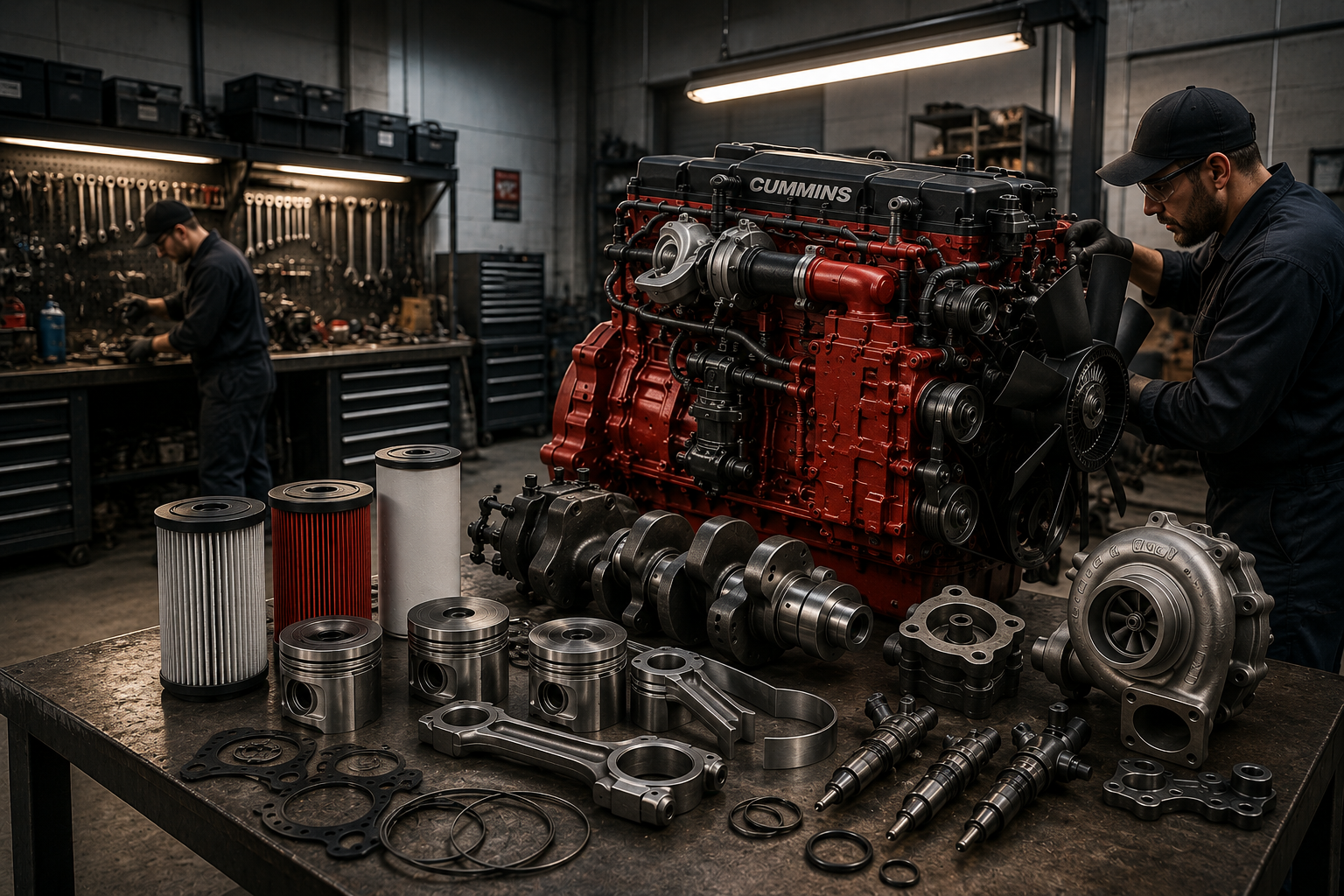
- Fuel Injectors: These highly accurate instruments are the “heart” of the system, and deliver the fuel to the combustion chamber at extreme pressure, over 30,000 PSI. It guarantees the optimum atomization, the cleanest combustion, and minimum exhaust emissions.
- Turbochargers: These awesome gadgets use the unused exhaust gases and compress air back into the cylinders so it contains plenty of oxygen. It boosts the engine’s torque and overall power output without requiring a heavier, larger engine block.
- Pistons and Rings: These are the moving parts at the bottom of the combustion chamber, which compress the intake air forcibly. These rings seal in the expanding exhaust gases, and when they become worn, they allow the pressure to escape. This results in substantial loss of power and speedy contamination of the oil.
- Crankshaft and Camshaft: The forged steel crankshaft converts the rapid, up-and-down movement of the pistons into rotating power. In the meantime, the camshaft controls the movement of the intake and exhaust valves to ensure that the whole engine functions in perfect harmony.
How Does Preventive Maintenance Keep Your Motor Running?
These large motors run at extremely high internal crushing pressure and temperatures, so even simple things such as the basic fluid changes or filter swaps can cause a domino effect of internal damage. If your vehicle emits heavy black exhaust smoke, has problematically difficult cold starts, or a sudden, frightening drop in oil pressure on the gauge, that’s a big red flag.
- Oil and filter changes: We change the lubrication fluid and filters every 15,000 miles or as needed. It can be done sooner under severe hauling loads to limit the amount of gritty abrasive metal particles. These can cause permanent scarring to your sensitive internal bearings.
- Comprehensive Fuel System Care: We can change your fuel system filters every 15,000 to 25,000 miles. A modern, highly calibrated, high-pressure rail system may not tolerate the presence of water, dirt, or tiny particles.
- Cooling System and Thermostat Checks: Check the cooling system additives frequently and check all rubber hoses for signs of deterioration on the inside. We prevent your cylinder head from warping under extremely high heat or blowing out a head gasket.
- After-treatment and DPF Cleaning: Modern emissions equipment needs DPF regeneration cycles and Diesel Exhaust Fluid (DEF) top-offs at regular intervals. Failure to do so causes a buildup of particulate filter, and the engine becomes choked, which results in costly downtime.
What Should You Consider Before Purchasing Replacement Spares?
The global market is currently flooded with low-quality knockoffs, but treating the Cummins diesel engines and parts like generic commodities will definitely cause a blown motor. Our team closely examines your engine block, the OEM serial number, material grades, and tolerances that were used in the original build.
- Verify True Authenticity: Always check for the proper manufacturer branding, official holograms, and serial numbers that can be verified. Make sure that the parts you are purchasing are actually Cummins diesel parts and not a cheap, unsafe counterfeit that will fall apart in no time.
- Prioritize OEM Quality: Original Equipment Manufacturer diesel engine parts are somewhat more expensive to purchase upfront. However, the right metallurgy ensures longevity in a high-heat and high-stress commercial environment.
- Look for Seller Backed Warranties: Only buy mechanical parts that have a full warranty from the seller. We also provide acknowledged safety certifications to make you believe in the longevity of our product.
- Evaluate Supplier Reputation: Guard your heavy machinery by sourcing your Cummins diesel engines and parts from established, highly reputable distributors. We provide comprehensive technical support, clear return policies, and prompt delivery, ensuring minimal downtime in your operations.
Keep Your Fleet Moving Forward
Even the most experienced fleet managers, old-school truck owners, and seasoned mechanics will occasionally have questions that are so complicated that a little bit of expert, manufacturer-level clarification is needed.
The ultimate key to reducing unplanned downtime and maximizing daily efficiency on the jobsite is sourcing the absolute best diesel engine parts. When you are finally ready to secure reliable, factory-grade components, reach out to Cummins Dongfeng.
Key Takeaways
- Learn the core functions of vital motor components.
- Master a strict preventative maintenance schedule.
- Discover how to verify genuine replacements to protect your machinery from premature failure.
Frequently Asked Questions
How often should a heavy-duty motor be fully serviced?
A full professional inspection involves checking the valves, belts, and after-treatment systems at least every 6 months. While basic oil and filter changes are generally recommended at every 15,000 miles. That will depend on how harsh the truck’s daily conditions are.
What usually causes thick black smoke to pour from the exhaust?
A rich fuel condition or incomplete combustion is indicated by dark, sooty smoke. This is due to a faulty mechanical injector pump, a very dirty air filter that starves the engine of oxygen, or a bad EGR valve.
Will installing aftermarket components completely void my factory warranty?
This varies greatly according to the component and warranty conditions. Installing a standard aftermarket air filter may not have a legal impact, but when a highly sensitive fuel delivery system is modified with non-approved Cummins diesel parts. It can definitely cancel out the coverage for any related catastrophic engine failures.