
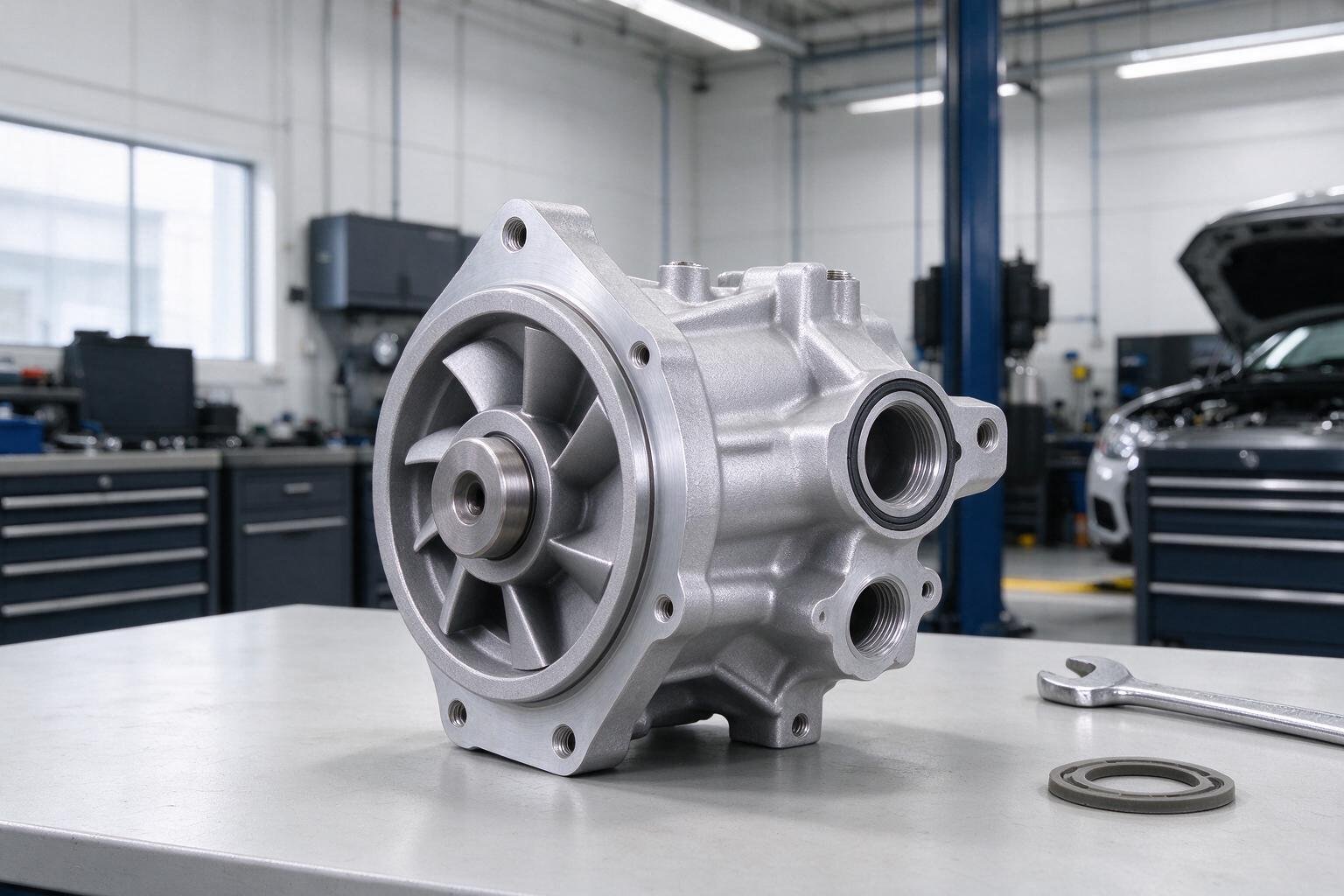
This Cummins 4BT water pump buying guide starts with the engine itself: the 4BT is a 3.9 L four-cylinder wet-sleeve diesel used in step vans, box trucks, generators, and industrial equipment. Because most units in service are older, cooling system parts are replaced on condition rather than by mileage alone. The 4BT shares its architecture with a long production run and many chassis installations, so the pump is often ordered by engine family when the actual requirement is defined by the front-end accessory drive.
Identifying the Correct Pump by Part Number and Engine CPL
Correct pump identification begins with the engine data plate, not the vehicle. The plate lists the engine serial number and the CPL (Critical Parts List). The CPL defines the specific build configuration of that engine, including the accessory drive and cooling package, and it is the most reliable single reference for narrowing the correct water pump variant.
Before removal, record the part number from the existing pump’s casting or tag. This number documents what was actually installed, which may differ from catalog listings. Cummins supersedes part numbers frequently; a discontinued number must be cross-referenced to the current replacement rather than ordered as-is.
Vehicle model year alone is not a reliable identifier. Repowered and remanufactured engines frequently carry a different pump than the original chassis build, so the engine serial number and CPL take precedence over chassis documentation.
For mixed fleets, an internal cross-reference table mapping engine serial ranges to pump part numbers reduces ordering errors at the counter. A basic format:
| Engine Serial Range | CPL | Pump Part Number | Notes |
|---|---|---|---|
| 00000000–00000000 | XXXX | XXXXXXX | Supersedes XXXXXXX |
| 00000000–00000000 | XXXX | XXXXXXX | Verify pulley groove count |
Where the original tag is unreadable, measure hub height, pulley diameter and groove count, and inlet/outlet bore sizes, then match those dimensions against supplier data. Dimensional verification confirms the selection when part number records are incomplete.
Housing and Mounting Variations
Cummins 4BT water pumps are not interchangeable across all applications. Several housing castings are in circulation, differing in mounting bolt pattern, inlet orientation, and bypass port location. A pump that looks correct at a glance may not seat or seal against the block or timing cover, so identification by casting number and fitment check takes precedence over visual similarity.
Bolt Pattern and Seal Interface
Confirm the number and position of mounting bolts before ordering. Equally important is the seal interface: some housings use an O-ring groove, while others rely on a gasket face. Mixing the two styles produces leaks at the mounting flange that are frequently misdiagnosed as a failed shaft seal. Verify which interface the block or timing cover expects.
Inlet, Outlet, and Hose Beads
Measure inlet and outlet diameters and inspect the hose bead profile. Some aftermarket housings omit the bead or use a different bore diameter, which allows the hose to slip off under system pressure. Compare the new housing against the removed unit at each connection point.
Housing Material
Both cast iron and aluminum housings are in circulation. Record the material when specifying a replacement, since corrosion behaviour and fastener torque values differ between the two.
| Check | What to Verify |
|---|---|
| Mounting bolts | Count and position match the block or timing cover |
| Seal interface | O-ring groove or gasket face, not mixed |
| Hose connections | Diameter and bead profile match the original |
| Housing material | Cast iron or aluminum, with correct torque values |
Mating Surface Condition
Inspect the mating surface flatness on the block or timing cover before installation. Pitting or erosion at the seal land causes repeat failures regardless of pump quality, and resurfacing or replacement of the cover may be required before a new pump is fitted.
Impeller Type, Material, and Flow Characteristics
Original-style 4BT water pump impellers are typically cast iron or stamped steel. Many aftermarket units substitute molded composite or plastic impellers, which vary widely in erosion resistance and burst strength. Material alone does not determine suitability; service duty does.
Composite impellers can be acceptable in light-duty service. They are a poor match for high-hour continuous-duty applications such as generator sets or reefer units, where sustained heat cycles and constant shaft speed accelerate erosion and fatigue.
Vane count and impeller diameter should be compared against the original before installation. A reduced-diameter or low-vane impeller lowers flow and can cause overheating at load even when the pump appears to fit correctly. Visual fit is not a flow specification.
| Check | Effect if Out of Spec |
|---|---|
| Impeller diameter vs. original | Lower flow, overheating at load |
| Vane count vs. original | Reduced flow capacity |
| Impeller-to-housing clearance | Efficiency loss, cavitation promotion |
| Impeller material vs. duty cycle | Erosion, burst risk in continuous service |
Impeller-to-housing clearance affects efficiency. Excessive clearance from poor casting tolerance reduces flow and promotes cavitation. Clearance should be verified on the bench where feasible.
Cavitation damage on the old impeller suggests air ingress, a restricted inlet, or a low coolant level. Correct the root cause before fitting a replacement, or the new pump will fail the same way. Inspect the inlet path, hose condition, and coolant level as part of the repair.
Seal and Bearing Quality: What Separates Grades
The shaft seal is the primary wear item on a Cummins 4BT water pump, and its design largely determines service life. Unitized mechanical face seals with a carbon or silicon carbide face generally outlast simple lip seals or packed designs in diesel coolant service. The unitized construction keeps the seal faces aligned and protected during installation, which reduces the risk of premature failure from handling damage.
Bearing grade drives noise and shaft play. Pumps should be specified with branded, pre-lubricated sealed ball bearings rather than unbranded bearings of unknown clearance class. Unbranded bearings may fit correctly at first but develop play and whine as coolant contamination or load cycles take their toll.
The weep hole is a diagnostic feature, not a defect. Coolant at the hole indicates seal failure on the coolant side. Oil residue at the hole points to bearing or shaft seal failure on the drive side. Technicians should read the weep hole before condemning a pump for other symptoms.
Shaft hardness and surface finish at the seal face also affect seal life. Poorly finished or soft shafts cause premature seal wear and repeat comebacks, even when a quality seal is fitted.
Buyers should ask suppliers for bearing brand, seal type, and impeller material in writing. Catalog listings frequently omit these details, and price alone does not indicate grade.
| Feature | Lower grade | Higher grade |
|---|---|---|
| Shaft seal | Lip or packed design | Unitized mechanical face seal, carbon or SiC face |
| Bearings | Unbranded, unknown clearance | Branded, sealed, pre-lubricated ball bearings |
| Shaft at seal face | Unspecified finish or hardness | Controlled hardness and surface finish |
| Documentation | Omitted from listing | Bearing brand, seal type, impeller material stated |
Pulley, Hub, and Fan Drive Configuration
The front-end accessory drive on a 4BT varies by application, and the water pump must match the original configuration exactly. Pulley groove count, outside diameter, and belt section must correspond to the removed unit. Most 4BT engines use a V-belt drive, though some installations run a serpentine belt; the two are not interchangeable. Pulley diameter directly sets belt speed, so a larger or smaller pulley than original will alter the driven speed of the alternator, fan, and other accessories, which can affect charging output and cooling performance.
Hub geometry is equally critical. Hub height and pilot diameter must match the fan spacer or fan clutch. Incorrect hub height changes fan-to-radiator clearance and shifts the pulley plane, causing belt misalignment that loads both the belt and the pump bearing. Retention methods also differ: some 4BT installations use a pressed-on hub, while others use a keyed or bolted hub. Confirm the retention method on the original pump before ordering a replacement.
| Check | Specification to Verify |
|---|---|
| Pulley | Groove count, diameter, belt section (V-belt or serpentine) |
| Hub | Height, pilot diameter, retention method (press, key, bolt) |
| Fan clutch | Mounting thread and pilot diameter at hub |
| Runout | Measure at pulley face after installation |
After installation, check pulley runout with a dial indicator. Excessive runout accelerates belt wear and can damage the pump bearing. On fan-clutch equipped units, verify the clutch mounting thread and pilot against the new pump hub, since aftermarket hub dimensions vary between suppliers.
Inspection and Acceptance Checks on Receipt
Every 4BT water pump should be inspected before it reaches the engine. The checks below take a few minutes and catch most wrong-part and defective-stock issues at the counter rather than after installation.
Part Number and CPL Verification
Verify the part number on the box against both the purchase order and the engine’s CPL (Critical Parts List) reference. The 4BT was built in many configurations, and pulley, hub, and housing details vary by application. Mis-boxed pumps are a common source of wrong-part installation, particularly when multiple similar part numbers are stocked on the same shelf. Confirm the number on the pump casting or label matches the box before signing off on receipt.
Shaft and Seal Checks
Rotate the shaft by hand. It should turn smoothly with no detectable axial or radial play and no gritty feel. Any roughness suggests bearing damage or contamination. Inspect the weep hole on a new unit for coolant residue or oil; either indicates a damaged seal or contaminated stock, and the unit should be rejected. Where the inlet port allows a view of the impeller, check for vane damage, casting flash, or a loose fit on the shaft.
Contents and Documentation
Confirm that gaskets, O-rings, and mounting hardware are included as specified on the order. Missing seals often force a second order and delay the job. Log the supplier, part number, and batch code on the repair order. This record supports warranty claims and allows failure trend analysis across the fleet.
| Check | Accept | Reject |
|---|---|---|
| Box vs. order and CPL | Numbers match | Any mismatch |
| Shaft rotation | Smooth, no play | Rough, axial or radial play |
| Weep hole | Dry | Coolant or oil present |
| Impeller (via inlet) | Intact, secure | Damaged, flash, loose |
| Seal kit and hardware | Complete | Missing items |
Installation Practice and Failure Prevention
Cooling system condition at the time of pump replacement strongly influences seal life. Before fitting a new pump on a Cummins 4BT, flush the cooling system and replace the thermostat and coolant. Residual debris and degraded coolant chemistry can shorten seal life even when the pump itself is sound. Flushing removes scale and sediment that would otherwise migrate to the seal face.
Clean the seal land and bolt holes before assembly. Torque fasteners to the engine-specific specification using the correct sequence to avoid housing distortion, which can cause misalignment and premature bearing or seal failure. Contaminated or damaged threads affect torque accuracy, so chase or clean them as needed.
Use the specified coolant type and mix ratio. Incorrect chemistry or excessive silicate content accelerates seal and impeller wear and may leave deposits on the seal face. Confirm the coolant specification against the engine serial number rather than assuming a universal product is suitable.
After installation, check belt tension and alignment, and confirm fan and radiator clearances through the full belt adjustment range. Interference at any point in the adjustment arc can damage the fan or radiator in service.
Advise the customer or driver to monitor coolant level and weep hole condition during the first operating hours. Early seepage at the weep hole indicates seal distress and warrants inspection before further operation. Record the pump replacement, coolant type, and date in the maintenance history to support trend analysis across the fleet.
| Check | Action | Purpose |
|---|---|---|
| Cooling system | Flush; replace thermostat and coolant | Remove debris and degraded chemistry |
| Seal land and bolt holes | Clean; torque to engine-specific spec in correct sequence | Prevent housing distortion |
| Coolant | Verify type and mix ratio | Limit seal and impeller wear |
| Belt and clearances | Check tension, alignment, fan and radiator clearance | Avoid interference through adjustment range |
| First operating hours | Monitor coolant level and weep hole; log replacement | Detect early seal distress and build trend data |